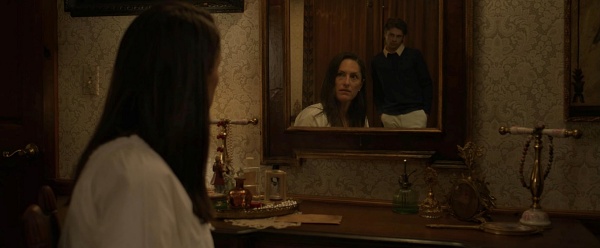
The Italian production designer discusses symbolism, psychological storytelling, and creating a world where every object has a purpose.
For Italian production designer Francesca Porcelluzzi, the most memorable cinematic worlds are those where every visual element serves a purpose. A carefully placed photograph, an antique piece of furniture, or a seemingly insignificant object can quietly reveal character, foreshadow events, and deepen the emotional experience without ever drawing attention to itself. That philosophy has become the cornerstone of her growing career in Los Angeles.
Originally from Italy, Porcelluzzi began her film studies before relocating to the United States to pursue a career in filmmaking. She holds a Master's degree in Television, Cinema, and New Media from IULM University in Milan and a Master's degree in Film and Media Production from the New York Film Academy, where she further refined her passion for visual storytelling and world-building.
Working across feature films, narrative shorts, and commercial productions, Porcelluzzi has earned a reputation for creating immersive environments that feel authentic, emotionally grounded, and inseparable from the stories they support. Rather than treating production design as decoration, she approaches every project by asking how environments, textures, colors, and objects can reveal character, shape mood, and strengthen narrative.
Her growing body of work reflects an impressive creative range. In the period drama Magnolia Daughter, she transformed a modern home into a believable 1970s family residence through meticulous historical research and inventive design solutions. On the acclaimed short 10:52, she recreated an authentic Kurdish household through extensive cultural research, carefully selecting fabrics, décor, and family heirlooms that honored the film's emotional and cultural authenticity. Meanwhile, on the feature drama She Reminds Me of You, she designed two visually contrasting worlds that reflected the emotional journeys of characters navigating grief, hope, and healing.
Now, Porcelluzzi is taking audiences into an entirely different world with Mickey Chevran, a psychological thriller where symbolism and atmosphere become as important as dialogue itself.
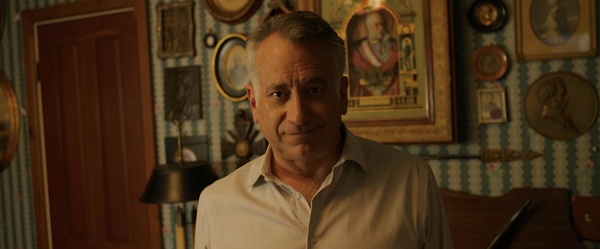
The film follows a young man torn between honoring his late father's wishes and uncovering the truth surrounding his mysterious death. As he is drawn deeper into the shadowy world of a powerful secret organization known as the Ordinance, he begins questioning everything he believes about his family, his destiny, and ultimately, himself.
For Porcelluzzi, it was exactly the kind of layered storytelling she loves.
“I've always been drawn to stories where the visual world can communicate just as much as the dialogue,” she says. “When I read the script, I immediately connected with its blend of psychological drama, mystery, and symbolism. It presented so many opportunities to tell the story through production design.”
Her connection to the project also had personal roots. Porcelluzzi first met writer-director Hitesh while they were both studying at the New York Film Academy. Their shared appreciation for cinematic storytelling naturally evolved into a creative collaboration.
“I really connected with Hitesh's vision. We wanted the world to feel elegant and sophisticated, but also mysterious and emotionally grounded. Finding that balance became one of the most enjoyable parts of the project.”
Unlike productions that rely on numerous locations, Mickey Chevran unfolds largely within the Chevran family home. That presented a unique challenge: creating visual variety while ensuring the house itself became an extension of the narrative.
“We wanted every room to have its own atmosphere,” Porcelluzzi says. “Although the audience spends much of the film inside one location, each space reflects different emotional beats in the story and reveals something about the characters who inhabit it.”
The result is a home that feels simultaneously inviting and unsettling—a subtle reflection of the psychological tension unfolding beneath its surface.
“It was important that the house felt warm enough to believe people had lived there for years, but also carried an underlying sense of mystery,” she explains. “That contrast became one of my favorite creative challenges.”
Perhaps even more significant was the role symbolism played throughout the design process.
Rather than filling rooms with decorative objects, Porcelluzzi carefully selected pieces that carry narrative meaning.
“One of my favorite aspects of designing the film was creating meaning through objects,” she says. “The lion statue, antique revolver, chessboard, owl cards, perfume vial, and Arthur's study all carry symbolic weight throughout the story. Every detail had to feel intentional.”
It's an approach that perfectly aligns with her broader philosophy of production design.
“I believe audiences notice more than they realize. Even if they don't consciously recognize every visual clue, those details help shape the emotional experience of watching a film.”
That level of intentionality begins long before cameras roll. Porcelluzzi starts each project by studying the emotional journey of the characters rather than focusing solely on aesthetics.
“I spend a lot of time understanding who the characters are, how they live, and what kind of world surrounds them,” she explains. “From there, I begin exploring colors, textures, architecture, and objects that can support the story.”
Equally important is collaboration. She believes the strongest production design emerges when directors, cinematographers, and designers build a unified visual language together.
“Filmmaking is completely collaborative,” she says. “The best ideas come from communication and trust. My job is to support the director's vision while finding visual solutions that strengthen the storytelling.”
That collaborative mindset has become one of the defining characteristics of her career, allowing her to move confidently between genres, time periods, and storytelling styles.
Whether recreating the 1970s, honoring the traditions of a Kurdish family, expressing grief through architecture, or constructing a psychological thriller filled with hidden symbolism, Porcelluzzi approaches every project with the same guiding principle: every visual choice should serve the story.
With Mickey Chevran, she demonstrates that production design can do far more than establish a setting. It can quietly plant clues, reinforce themes, heighten suspense, and invite audiences to look a little closer at the world unfolding before them.
As her body of work continues to expand, Francesca Porcelluzzi is establishing herself as a production designer whose greatest strength lies in her versatility. Whether recreating another era, honoring cultural authenticity, visually expressing a character's emotional journey, or weaving symbolism into every frame, she approaches each project as a collaborative storyteller. It's that combination of creativity, adaptability, and thoughtful craftsmanship that continues to make her a valued creative partner for filmmakers seeking to build worlds that linger long after the credits roll.
Mickey Chevran is currently in post-production. Festival screenings and release information will be announced at a later date.